Learn if any smartwatch can monitor blood sugar, what technology exists now, what the FDA says, and how glucose data appears on smart devices.
Many people with diabetes or those interested in health tracking wonder: Is there a smartwatch that monitors blood sugar? With fitness trackers and smartwatches already measuring heart rate, steps, sleep, and oxygen levels, the idea of a watch that could read your blood glucose sounds incredibly useful. But when it comes to real, accurate blood sugar monitoring, the situation is more complicated.
Right now, no smartwatch on the market by itself can directly and accurately measure blood sugar levels without additional sensors placed under the skin. Health regulators and medical experts around the world make this clear: while many devices claim to do this using light or optical sensors, none have been officially validated or approved as reliable devices for blood glucose measurement. This means there is no smartwatch today that truly functions as a standalone blood glucose monitor.
What People Think Smartwatches Can Do

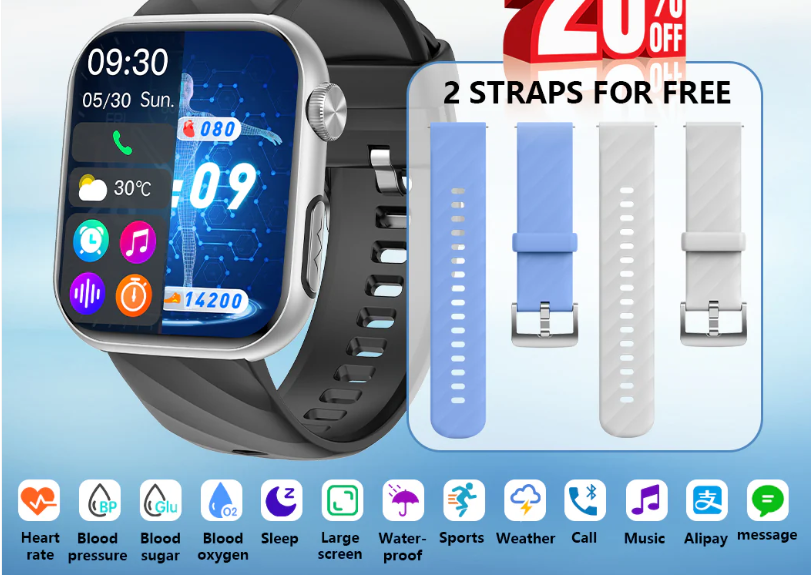
Some smartwatches on the market claim to monitor blood sugar by using optical sensors embedded in the wristband. These watches often advertise “non-invasive glucose monitoring,” meaning they claim to read blood sugar without breaking the skin. They sometimes use light-based sensors or algorithms that try to estimate glucose levels based on body signals like sweat or blood flow.
However, health authorities have warned that these claims are not backed by scientific proof or regulatory approval, and such devices are not reliable for medical use. Using them to make decisions about insulin, diet, or medication could be unsafe.
What the FDA and Health Experts Say

The U.S. Food and Drug Administration (FDA) has specifically issued warnings about smartwatches or smart rings that claim to measure blood sugar without piercing the skin. According to the FDA, no smartwatch or wearable device has been authorized, cleared, or approved to measure or estimate blood glucose by itself. The agency is concerned that inaccurate readings could lead to serious mistakes in diabetes management, including incorrect use of insulin or other medications, which can be dangerous or even life-threatening.
Medical experts emphasize that accurate blood sugar readings are vital for people who depend on glucose data to manage their health. Anything that isn’t precise could cause harm if someone changes their medication or insulin based on a faulty result.
How People Currently Use Smart Devices for Blood Sugar

While a smartwatch by itself cannot measure blood sugar, smartwatches can display glucose data from approved medical devices called continuous glucose monitors (CGMs). CGMs are small sensors placed just under the skin that measure glucose levels in the interstitial fluid throughout the day. These sensors are approved by health authorities and are used widely by people with diabetes.
When paired with a smartphone app, many CGMs can send blood sugar readings to a smartwatch. For example, users of certain CGM systems can see their real-time glucose numbers, trends, and alerts directly on their watch screen—as long as the watch and phone are connected. This setup is not a built-in feature of the smartwatch itself; it relies on an external medical sensor and software integration to display the glucose information.
Devices That Claim to Measure Glucose
Despite the official warnings, many products sold online claim to measure blood sugar non-invasively using smart tech. These watches often advertise painless monitoring, continuous tracking, and smartphone app support. They may also include features like heart rate tracking and other health data in one package.
But because health authorities have not approved these devices, their measurements are not medically reliable and should not be used to manage diabetes or other medical conditions. These products may appear attractive, but they can give inaccurate data, and relying on them for important health decisions can be risky.
Read also:-Best Wireless Earbuds 2025: The Next Level of Audio Freedom
Future Possibilities for Smartwatch Blood Sugar Monitoring

Scientists and tech companies are actively researching new methods to monitor glucose without needles. Some studies have shown promising early results using sensors that detect glucose in sweat, optical signals, or other non-blood signals. In research labs, watches or wearable prototypes have been developed that can measure glucose from body fluids or with special patches. These experiments show potential for future products but are not yet proven or widely available.
In addition, some tech companies have filed patents for systems that could someday allow smartwatches to monitor glucose levels with advanced sensors and artificial intelligence. These patents hint that in the future, a smartwatch with reliable glucose monitoring might finally arrive.
Summary: What the Current Reality Is
- No current smartwatch can independently measure blood sugar accurately and safely.
- Smartwatches can display glucose data only when connected to approved medical devices like CGMs.
- Products that claim to monitor glucose without needles are not regulated or medically verified, and should be treated with caution.
- Research is ongoing, and future smartwatches may one day have reliable glucose monitoring built in.
Frequently Asked Questions (FAQs)
Q: Is there a smartwatch that can measure blood sugar directly?
A: No. At present, no smartwatch can independently measure blood sugar levels without a separate medical sensor.
Q: Can any smartwatches show blood sugar data?
A: Yes, smartwatches can show blood sugar data if they are connected to approved medical devices like continuous glucose monitors.
Q: Are devices that claim to monitor blood sugar without needles real?
A: Devices sold online claiming to measure blood sugar without needles are not approved by health authorities and can give inaccurate results.
Q: What should diabetics use to monitor glucose?
A: Reliable glucose monitoring is done using continuous glucose monitors or finger-stick blood glucose meters approved by health regulators.
Q: Can future smartwatches measure blood sugar accurately?
A: Researchers are working on new technologies, and future smartwatches may eventually be able to monitor glucose non-invasively.
Q: Are blood sugar features on smartwatches the same as CGMs?
A: No. Smartwatches alone do not measure glucose; they can only display data from a connected CGM.
Q: Should I trust smartwatch glucose data for treatment decisions?
A: No. You should rely only on medically approved glucose monitoring devices for health decisions.
Conclusion
For now, there is no smartwatch that truly monitors blood sugar by itself. Even though many products claim they can measure glucose through sensors or software, none are medically validated or approved by health authorities. If you need accurate and safe blood sugar monitoring, using approved continuous glucose monitors and consulting your healthcare provider is the best approach. Research continues, and one day a smartwatch with built-in, reliable blood glucose monitoring may become a reality — but that day has not yet arrived.