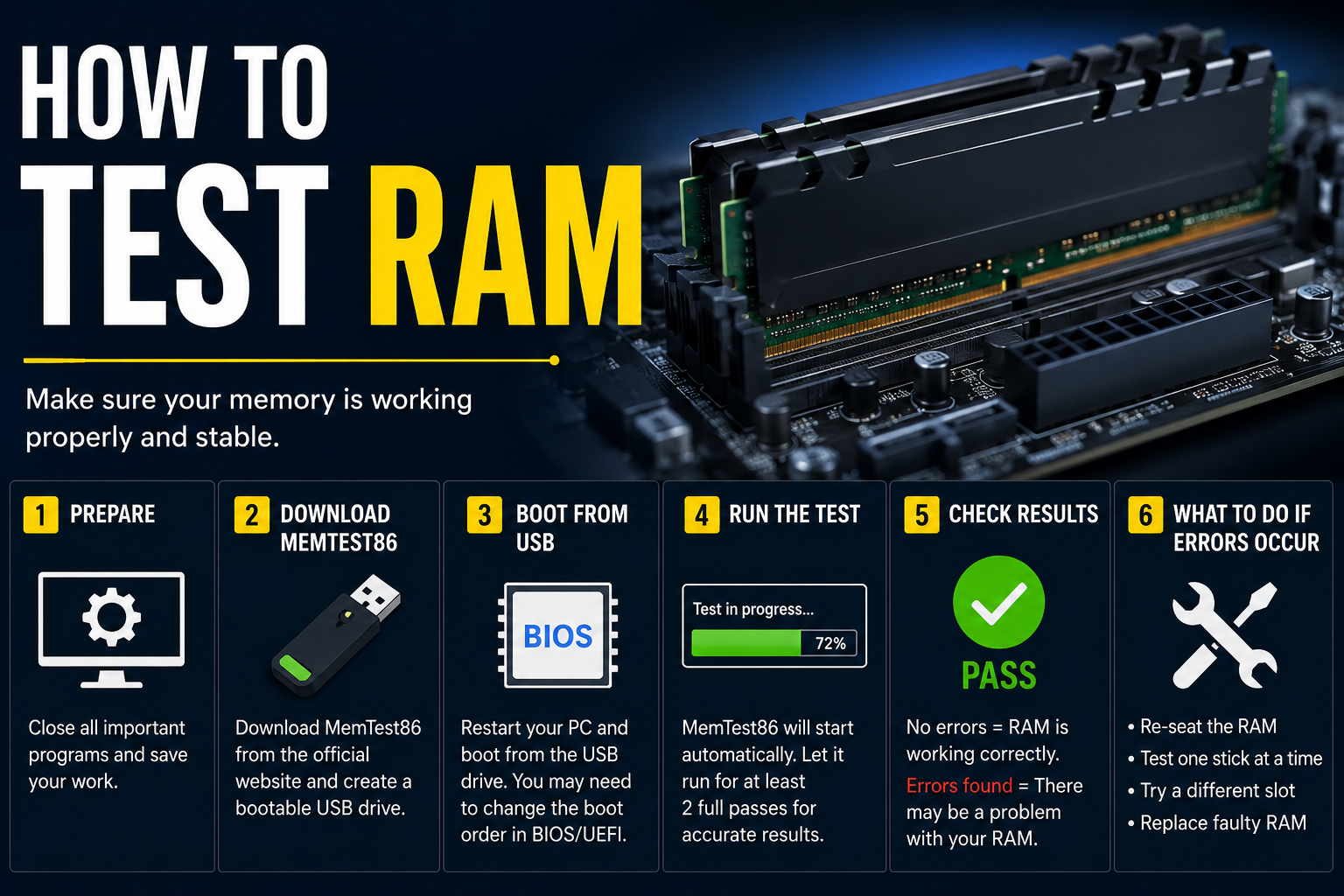
RAM is one of the most important parts of a computer. It helps your system run programs smoothly and quickly. If your computer becomes slow, freezes often, or shows random errors, the RAM may have a problem. That is why learning HOW TO TEST RAM is important for every computer user.
Testing RAM helps you find memory issues before they become serious. A damaged or faulty RAM stick can affect gaming, work, browsing, and overall computer performance. The good news is that checking RAM is not very difficult when you follow simple steps.
What Is RAM
Before learning HOW TO TEST RAM, it is important to understand what RAM does.
RAM stands for Random Access Memory. It stores temporary data while your computer is running. When you open apps, games, or files, RAM helps your system access information quickly.
More RAM usually means better multitasking and smoother performance. However, faulty RAM can cause crashes, blue screen errors, slow speed, or unexpected restarts.
Signs of Bad RAM
Many users search for HOW TO TEST RAM after noticing unusual computer problems.
One common sign is system freezing. Your computer may suddenly stop responding while working or gaming.
Another sign is random restarts. Faulty RAM can also cause applications to crash without warning.
Blue screen errors are another common symptom. Files becoming corrupted or programs not opening properly may also point to RAM issues.
If you notice these problems regularly, testing your RAM is a smart idea.
Why Testing RAM Is Important

Learning HOW TO TEST RAM can help you identify hardware problems early.
Bad RAM can damage system stability and reduce computer performance. If the issue is ignored, it may affect important files and software.
Testing RAM helps confirm whether memory is causing the problem or if another hardware part is responsible. This saves time and helps avoid unnecessary repairs.
Regular RAM testing is also useful after upgrading or installing new memory modules.
Simple Method to Test RAM
One of the easiest ways to learn HOW TO TEST RAM is by using built-in system tools.
Most computers already include memory testing features. Start by saving your work and restarting the computer.
Open the memory diagnostic tool from system settings. Choose the option to restart and scan for memory problems.
The computer will restart and begin checking the RAM automatically. This process may take several minutes depending on system size.
After the scan finishes, the computer will restart normally and show results.
Physical RAM Check
Another important part of HOW TO TEST RAM is checking the hardware physically.
Turn off the computer completely and disconnect power. Open the computer case carefully.
Locate the RAM sticks on the motherboard. Remove them gently and check for dust or dirt.
Sometimes poor connection causes memory problems. Cleaning the RAM slots carefully and reinstalling the sticks may fix the issue.
If your computer has multiple RAM sticks, try testing one stick at a time. This helps identify which RAM module may be faulty.
Testing RAM with Multiple Sticks

Many computers use more than one RAM stick. While learning HOW TO TEST RAM, testing each stick separately is helpful.
Remove all RAM sticks except one. Start the computer and use it for some time.
If the computer works normally, test the next RAM stick in the same way. A faulty stick may cause crashes or boot problems.
This method is simple and effective for finding damaged memory modules.
Common RAM Problems
While understanding HOW TO TEST RAM, it helps to know common RAM issues.
Dust buildup is a common problem. Dirty RAM contacts can interrupt proper connection.
Overheating may also affect RAM performance. Poor airflow inside the computer case can increase temperature.
Sometimes incompatible RAM causes instability. Using unsupported memory with the motherboard may create errors.
Physical damage, age, or manufacturing defects can also lead to RAM failure.
Read more:-How to Check Your RAM in Windows: 6 Simple Methods for System Information
Tips for Better RAM Performance
To keep your RAM working properly, follow some simple maintenance tips.
Keep your computer clean from dust. Good airflow helps prevent overheating.
Avoid forcing RAM sticks into slots during installation. Always handle memory carefully.
Restart your computer regularly and update system software when needed. Proper maintenance can improve stability and performance.
Learning HOW TO TEST RAM also helps you recognize small issues before they become bigger problems.
Common Mistakes to Avoid
Some users make mistakes while testing RAM.
One mistake is removing RAM while power is connected. Always turn off the system completely first.
Another mistake is touching RAM contacts directly with fingers. This can transfer oils or static electricity.
Skipping proper testing steps may also cause confusion. Test one RAM stick at a time for accurate results.
Final Thoughts
Learning HOW TO TEST RAM is an important skill for computer users. RAM problems can cause slow performance, crashes, and system instability, but proper testing helps identify the issue quickly.
By using simple software tools and checking the hardware carefully, you can diagnose memory problems at home. Regular RAM testing and maintenance also help keep your computer running smoothly for a long time.
❓ FAQ – HOW TO TEST RAM
Q1. What are signs of bad RAM?
Freezing, crashes, blue screens, and random restarts are common signs.
Q2. Can faulty RAM slow down a computer?
Yes, damaged RAM can reduce system performance.
Q3. Is RAM testing safe?
Yes, testing RAM is safe when done correctly.
Q4. Can dust affect RAM performance?
Yes, dust can cause poor connections and errors.
Q5. Should I test RAM after installing new memory?
Yes, testing helps confirm proper installation and compatibility.