Introduction
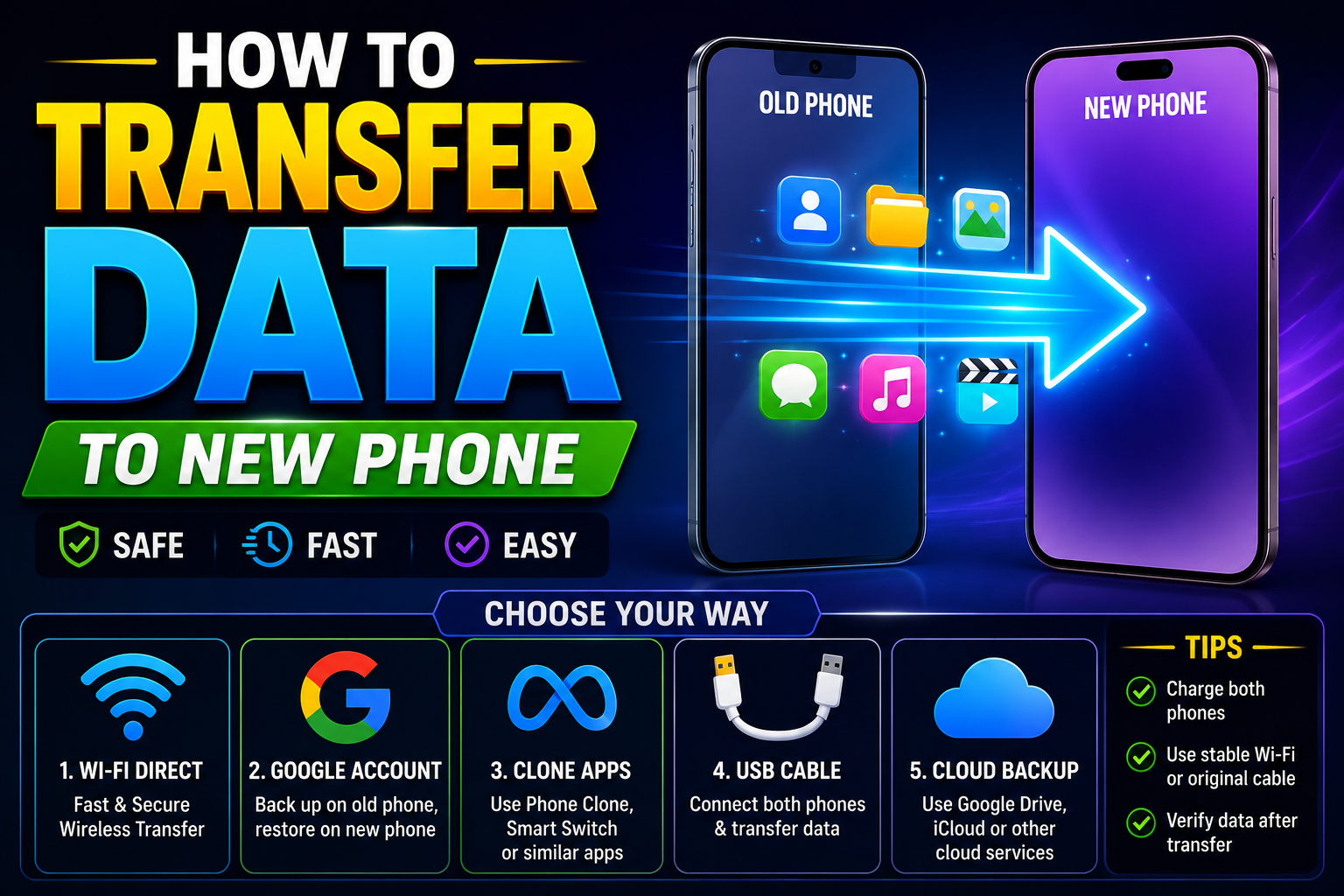
Buying a new smartphone is exciting, but one of the first questions most people ask is how to transfer data to new phone without losing important information. Your contacts, photos, videos, messages, apps, and documents are valuable, and moving them safely to a new device is essential.
Fortunately, modern smartphones make the process much easier than it was in the past. Whether you are switching from Android to Android, iPhone to iPhone, or moving between different platforms, there are several reliable methods available.
This guide explains everything you need to know about transferring data to a new phone, ensuring a smooth transition while keeping your important files secure.
Image Suggestion:
A person setting up a new smartphone with data transfer progress displayed on both devices.
Why Data Transfer Is Important
When upgrading to a new phone, transferring your data helps you continue using your device without starting from scratch.
Benefits include:
- Keeping contacts intact
- Preserving photos and videos
- Restoring apps and settings
- Retaining messages and call history
- Maintaining important documents
A proper data transfer process saves time and ensures nothing important is left behind.
Prepare Before Transferring Data
Before starting the transfer process, take a few important steps.
Charge Both Phones
Make sure both devices have at least 70% battery life. Data transfers can take time, especially if you have many photos and videos.
Connect to Wi-Fi
A stable Wi-Fi connection helps speed up cloud backups and data synchronization.
Update Software
Install the latest software updates on both devices to avoid compatibility issues during the transfer.
Create a Backup
Always create a backup of your old phone before beginning the transfer process.
Image Suggestion:
Two smartphones connected to Wi-Fi while preparing for data migration.
How to Transfer Data to a New Android Phone

If you are moving from one Android phone to another, Google provides a simple transfer process.
Step 1: Turn On the New Phone
Power on the new device and follow the setup instructions.
Step 2: Connect Both Devices
During setup, select the option to copy apps and data from another device.
You may connect phones using:
- Wi-Fi
- USB cable
- Cloud backup
Step 3: Sign In to Google Account
Use the same Google account from your old phone.
Step 4: Select Data to Transfer
Choose the items you want to move:
- Contacts
- Photos
- Videos
- Apps
- Messages
- Device settings
Step 5: Complete the Process
Wait for the transfer to finish. Larger amounts of data may require additional time.
Transfer Contacts to a New Phone
Contacts are often the most important data to preserve.
Using Google Contacts
If contact synchronization is enabled, your contacts automatically appear after signing in to your Google account.
Verify Contact Sync
- Open Settings.
- Select Accounts.
- Choose Google.
- Ensure Contacts Sync is enabled.
This method is fast and reliable.
Image Suggestion:
Contacts syncing between old and new smartphones.
Transfer Photos and Videos
Photos and videos typically occupy the most storage space.
Using Cloud Storage
Popular cloud backup options allow media files to synchronize automatically.
Benefits include:
- Automatic backup
- Easy restoration
- Access from multiple devices
Using Direct Transfer
You can also transfer media files through:
- USB cable
- Computer
- Wireless transfer apps
For large photo libraries, direct transfer is often faster.
Transfer Apps and App Data
Most modern smartphones can reinstall previously used applications automatically.
What Usually Transfers
- Installed applications
- App preferences
- Basic settings
What May Not Transfer
- Certain game progress
- Offline files
- Some app-specific data
Always check important applications after setup to confirm everything transferred correctly.
Transfer Messages and Call History
Many users want to keep text messages and call records when moving to a new device.
Backup and Restore
Most modern operating systems include built-in backup tools that save:
- SMS messages
- Call logs
- Device settings
After signing into your account, this information is often restored automatically.
Image Suggestion:
A messaging app restoring conversations during phone setup.
Transfer Documents and Files
Important documents should not be overlooked during the migration process.
Common Files to Transfer
- PDF documents
- Work files
- Presentations
- Spreadsheets
- Downloaded files
Cloud storage services and direct file transfer methods can safely move these files to your new phone.
Use Manufacturer Transfer Tools
Many smartphone brands provide dedicated migration tools.
Examples include:
- Samsung Smart Switch
- Xiaomi Mi Mover
- OnePlus Clone Phone
- Oppo Clone Phone
- Vivo Easy Share
These tools are designed to simplify the transfer process and often move nearly everything from the old device.
Common Problems During Data Transfer

Sometimes issues may occur during the migration process.
Slow Transfer Speed
Possible causes:
- Weak Wi-Fi connection
- Large file sizes
- Low battery
Missing Data
Solutions:
- Verify backups
- Check synchronization settings
- Restart the transfer process
Connection Errors
Try:
- Restarting both devices
- Updating software
- Using a cable connection
Most problems can be resolved with basic troubleshooting.
Read more:-How Much Is 1TB Of Data Storage: 5 Easy Powerful Facts You Should Know
Image Suggestion:
Data transfer troubleshooting screen showing successful completion after fixing an issue.
Tips for a Successful Phone Data Transfer
Follow these best practices:
- Create a backup before starting
- Use a strong Wi-Fi connection
- Keep devices charged
- Transfer data in one session
- Verify files after completion
- Keep your old phone for a few days before resetting it
These simple precautions can help prevent accidental data loss.
When Should You Reset Your Old Phone?
Do not immediately erase your old device.
Wait until:
- All contacts appear on the new phone
- Photos and videos are verified
- Messages are restored
- Apps work correctly
- Important files are accessible
Once everything is confirmed, you can safely perform a factory reset on the old device.
Conclusion
How to transfer data to new phone is much easier today thanks to cloud backups, built-in migration tools, and wireless transfer options. By preparing your devices properly, creating backups, and following the correct transfer method, you can move contacts, photos, apps, messages, and files without losing important information.
Whether you are upgrading to the latest smartphone or replacing an older device, a careful transfer process ensures that your new phone is ready to use with all your essential data intact.
FAQ
What is the easiest way to transfer data to a new phone?
Using the built-in phone setup process with a Google account or manufacturer transfer tool is usually the easiest option.
Can I transfer everything from my old phone to my new phone?
In most cases, yes. Contacts, photos, videos, apps, messages, and settings can usually be transferred successfully.
Do I need Wi-Fi to transfer phone data?
Wi-Fi is recommended for cloud backups, but many phones also support cable-based transfers.
How long does phone data transfer take?
The transfer time depends on the amount of data. Small transfers may take a few minutes, while larger transfers can take an hour or more.
Will my photos transfer to my new phone?
Yes. Photos can be transferred through cloud backups, direct device transfers, or a computer.
Can I transfer apps to a new phone?
Yes. Most smartphones automatically reinstall apps associated with your account during setup.
Should I erase my old phone immediately?
No. Verify that all data has transferred successfully before performing a factory reset on the old device.